


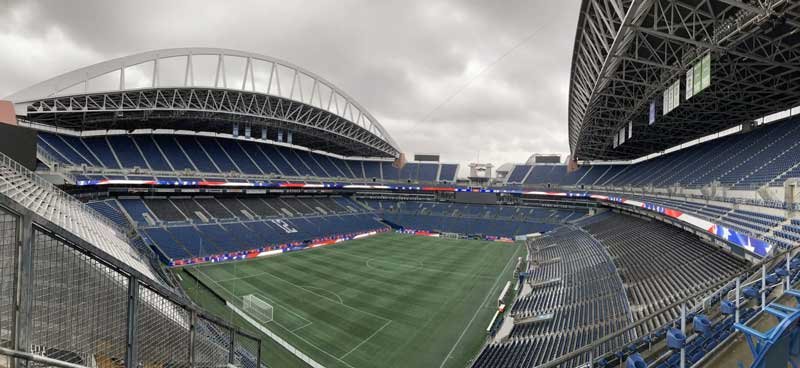
Sixteen stadiums. Three countries. One tournament that will rewrite the record books. The 2026 FIFA World Cup, hosted across the United States, Canada, and Mexico, will be staged in a collection of venues that ranges from refurbished classics to purpose-built contemporary arenas. For any fan planning to attend in person or simply wanting to understand the backdrop to each match they watch from home, knowing the venues is half the experience.
Until now, gathering reliable venue-specific information has required trawling through dozens of sources, often yielding conflicting data on capacities, match allocations, and locations. gameplan26.com changes that with a dedicated 2026 World Cup venue guide section covering all 16 host stadiums, each with its own page detailing capacity, scheduled matches, and geographical context.
THE VENUES OF THE UNITED STATES
The United States hosts the largest share of the tournament, with 11 of the 16 venues located across the country. The centrepiece is MetLife Stadium in East Rutherford, New Jersey, which will stage the final on July 19, 2026. With a capacity exceeding 82,000, it is one of the largest football stadiums in the world and has already hosted Super Bowls and major concerts. Its proximity to New York City makes it a natural focal point for the global media and the millions of international fans descending on the east coast.
AT&T Stadium in Arlington, Texas, brings one of the most recognisable architectural signatures of American sports to the tournament. The retractable-roof venue, home to the Dallas Cowboys, can hold up to 80,000 spectators and is expected to stage multiple group matches and knockout rounds. The Mercedes-Benz Stadium in Atlanta, Lumen Field in Seattle, SoFi Stadium in Los Angeles, and several other US venues round out a list that reflects the geographic and cultural breadth of the host nation.
THE VENUES OF CANADA AND MEXICO
Canada contributes two venues: BC Place in Vancouver and BMO Field in Toronto. These will be historic fixtures in their own right, as Canada has never hosted a World Cup and both cities are expected to generate enormous domestic enthusiasm.
Mexico brings three venues with deep footballing heritage. The Estadio Azteca in Mexico City is arguably the most storied football ground in the world, having previously hosted the 1970 and 1986 World Cup finals. It is set to make history again in 2026 as the only stadium to have hosted three World Cup finals. The Estadio BBVA in Monterrey and the Estadio Akron in Guadalajara complete Mexico’s contribution, both modern arenas capable of producing electric atmospheres.
PLANNING YOUR VISIT WITH GAMEPLAN26.COM
For fans planning to attend matches in person, the venue pages on gameplan26.com are an essential resource. Each page brings together the stadium name, location, capacity, and a full list of the matches scheduled there. This allows fans to cross-reference their preferred teams or stages of the tournament with the specific venues those matches will be held in, then plan travel accordingly.
The platform’s timezone conversion tool extends naturally to venue planning. If you are travelling from Europe and considering attending the semifinal at MetLife Stadium, you can check the scheduled kickoff time converted directly into your home time zone, then work backwards to plan your flight and accommodation.
A TOURNAMENT OF THIS SCALE DEMANDS A DEDICATED RESOURCE
No previous World Cup has been staged across three countries, and no previous tournament has spread 104 matches across 16 venues distributed over such a vast geographic footprint. The planning challenge for fans is proportionally larger than anything the sport has generated before.
gameplan26.com has been built to meet that challenge. Its venue guides, schedule data, and timezone tools give every fan, whether attending in person or watching from home, the context and clarity to engage with the tournament on their own terms.
Explore the full venue guide and plan your 2026 experience at https://gameplan26.com.